REAPS Redesign
REAPS Redesign
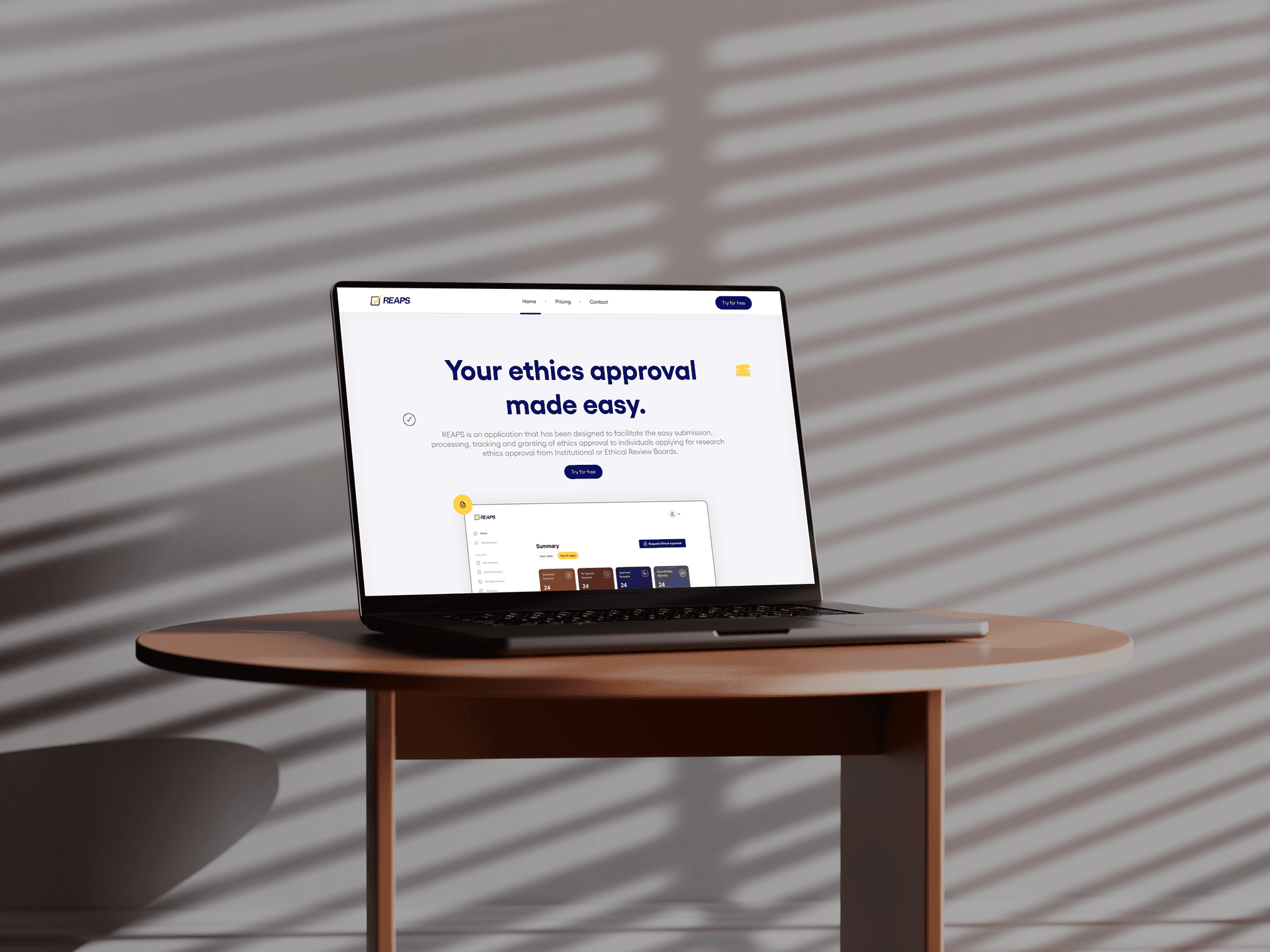
REAPS is a tool developed to simplify the process of submitting, processing, monitoring and approving ethics clearance for individuals seeking ethical review from Institutional or Ethical Review Boards.
REAPS is a tool developed to simplify the process of submitting, processing, monitoring and approving ethics clearance for individuals seeking ethical review from Institutional or Ethical Review Boards.
REAPS is a tool developed to simplify the process of submitting, processing, monitoring and approving ethics clearance for individuals seeking ethical review from Institutional or Ethical Review Boards.
Project type
Project type
Project type
Internal company project
Internal company project
Duration
Duration
Duration
4 Months
4 Months
My Role
My Role
My Role
I was the Lead UX Designer throughout the project cycle from planning and requirements gathering to strategy, wireframing, and content management. Also collaborated with the design and development teams to brainstorm ideas and problem solve.
I was the Lead UX Designer throughout the project cycle from planning and requirements gathering to strategy, wireframing, and content management. Also collaborated with the design and development teams to brainstorm ideas and problem solve.
Project Summary
Project Summary
Project Summary
The Research Ethics Approval System (R.E.A.P.S.) is a platform that facilitates ethical approvals for research projects. Before the redesign, the system suffered from usability issues and multiple complexes in the user flows which led to frequent user complaints and inefficiencies in the approval process.
The Research Ethics Approval System (R.E.A.P.S.) is a platform that facilitates ethical approvals for research projects. Before the redesign, the system suffered from usability issues and multiple complexes in the user flows which led to frequent user complaints and inefficiencies in the approval process.
Why the Re-design?
Why the Re-design?
Why the Re-design?
Initially, we made major improvements to enhance usability and user experience which made it better, but because the the system was built in a way that it was so difficult for our developers to alter the code so our improvements could not fully resolve user frustrations . A comprehensive redesign was needed to streamline workflows, improve accessibility, and ensure a more intuitive user experience.
Initially, we made major improvements to enhance usability and user experience which made it better, but because the the system was built in a way that it was so difficult for our developers to alter the code so our improvements could not fully resolve user frustrations . A comprehensive redesign was needed to streamline workflows, improve accessibility, and ensure a more intuitive user experience.
The Challenge/Problem
The Challenge/Problem
The Challenge/Problem
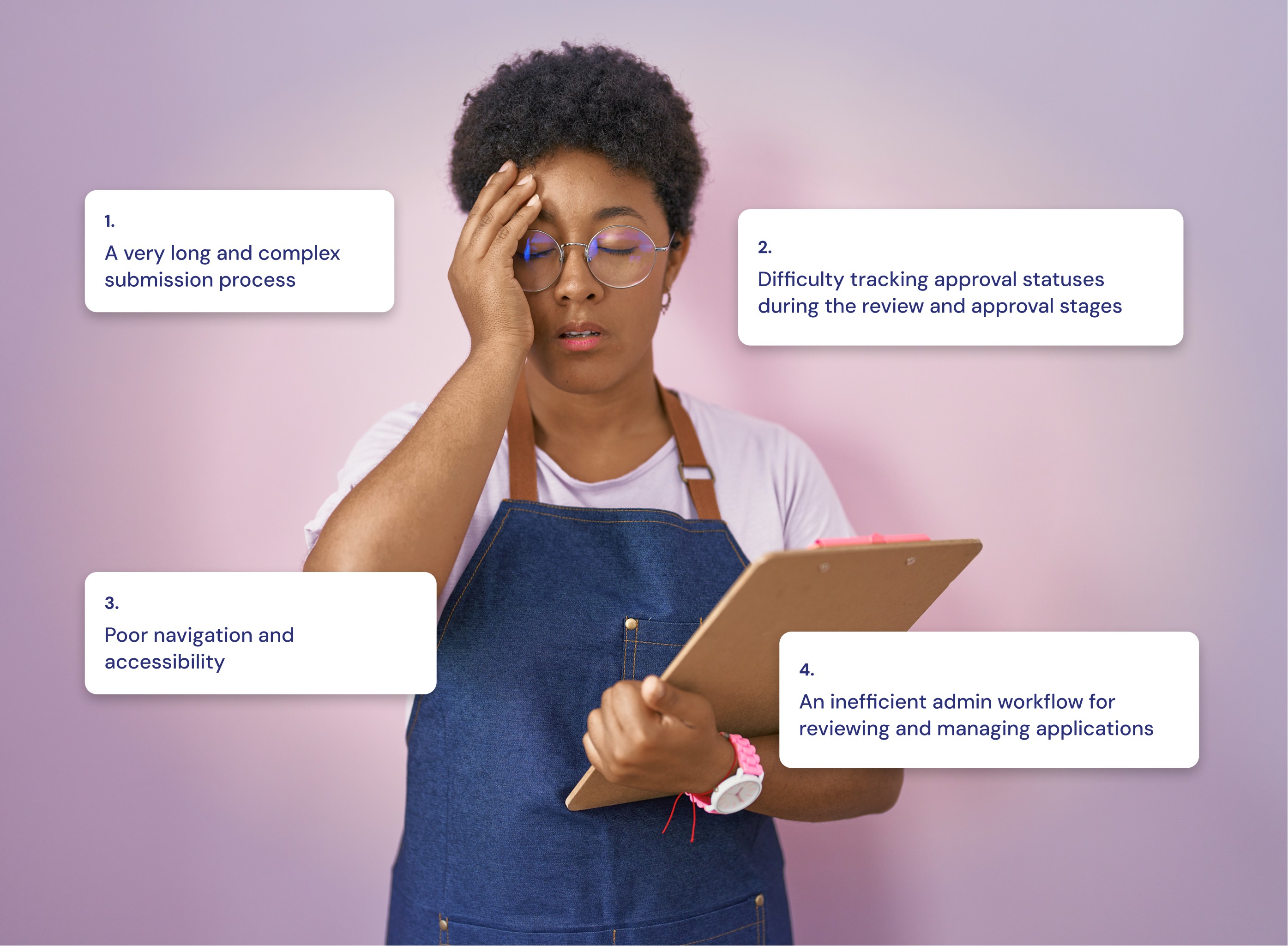
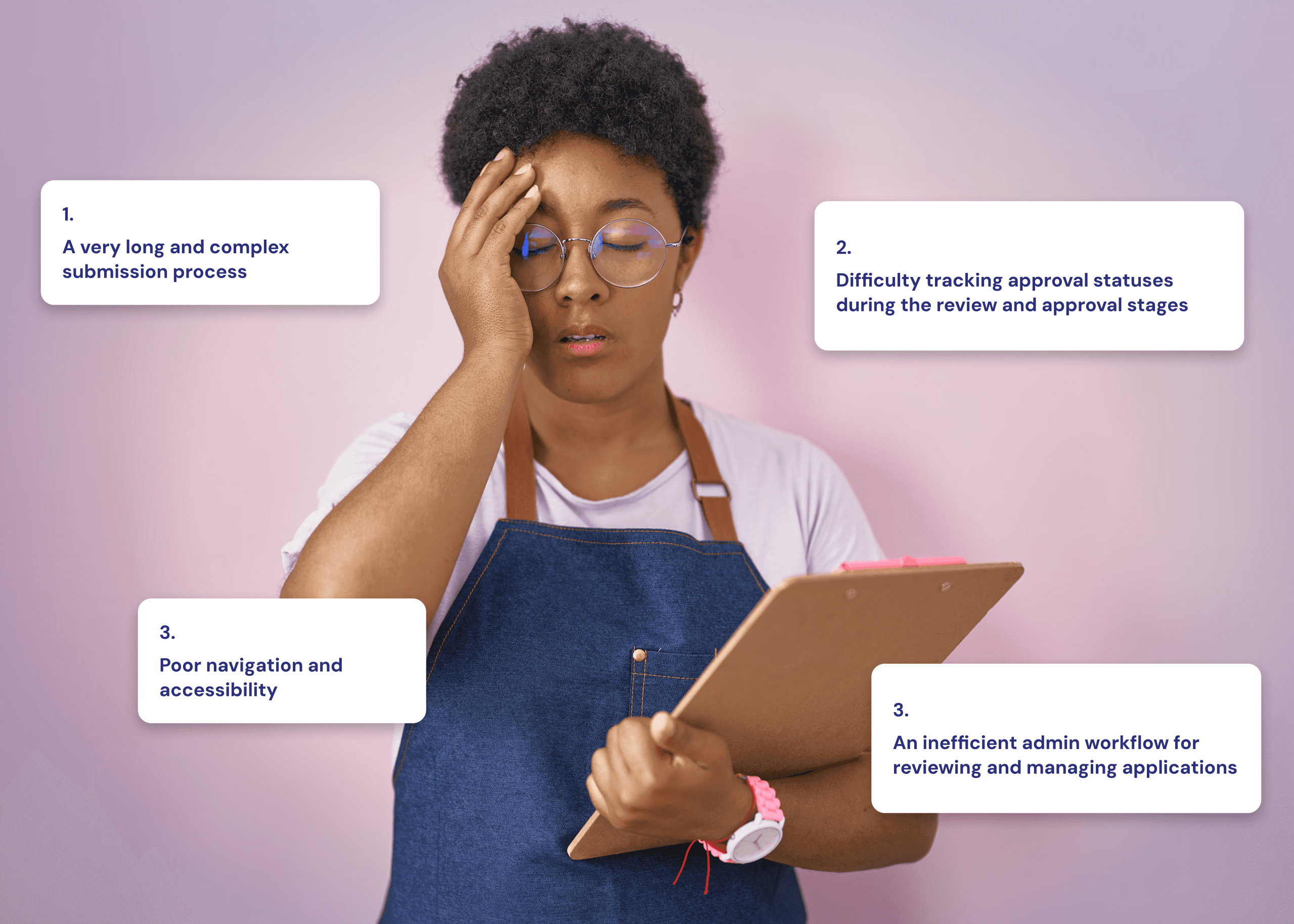
How can we improve the usability issues which causes delays and frustration for users, we highlighted the following problems
How can we improve the usability issues which causes delays and frustration for users, we highlighted the following problems
The Solution
The Solution
The Solution
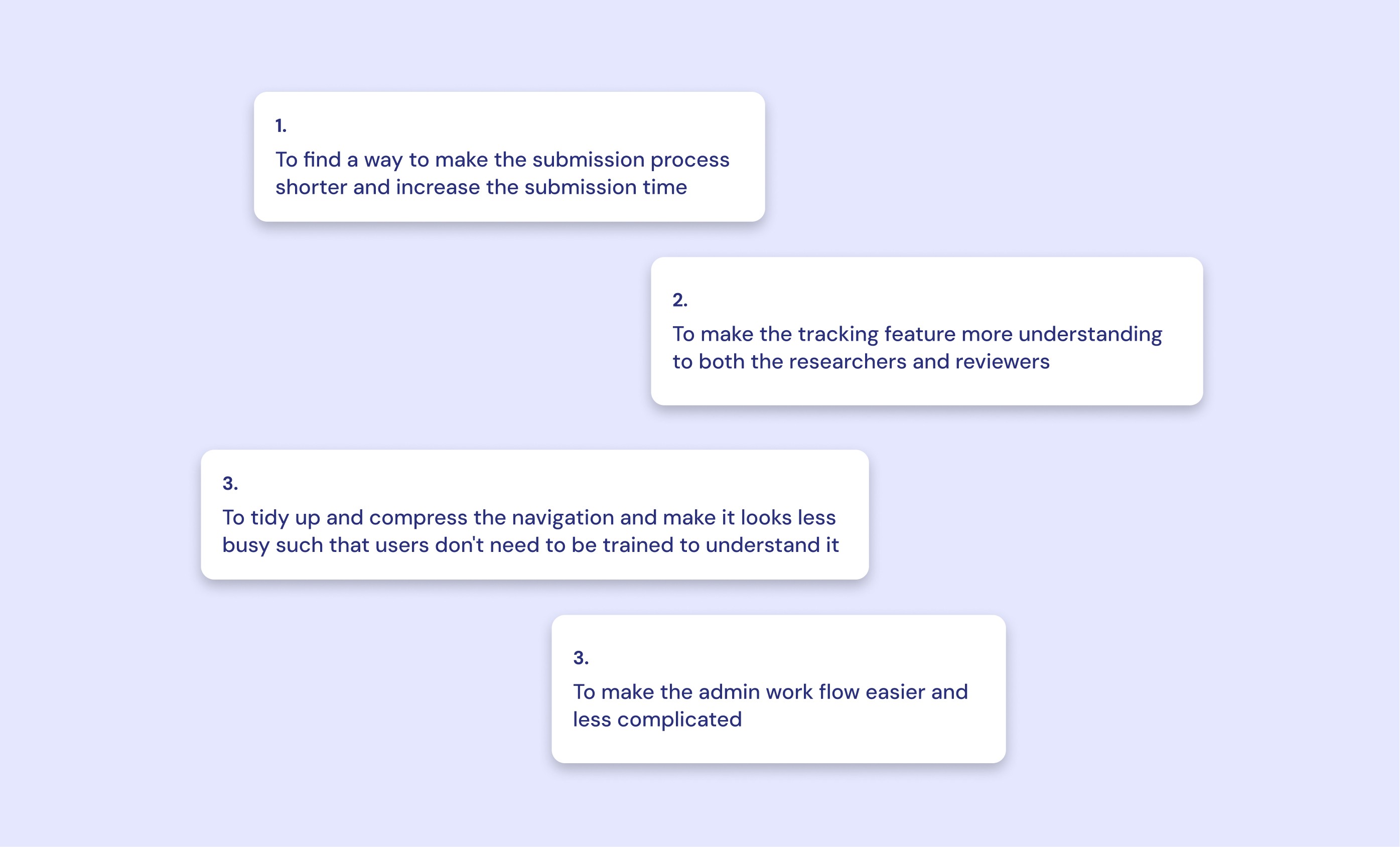
To make the product better, we looked to achied the following goals
To make the product better, we looked to achied the following goals
Process
Process
Process
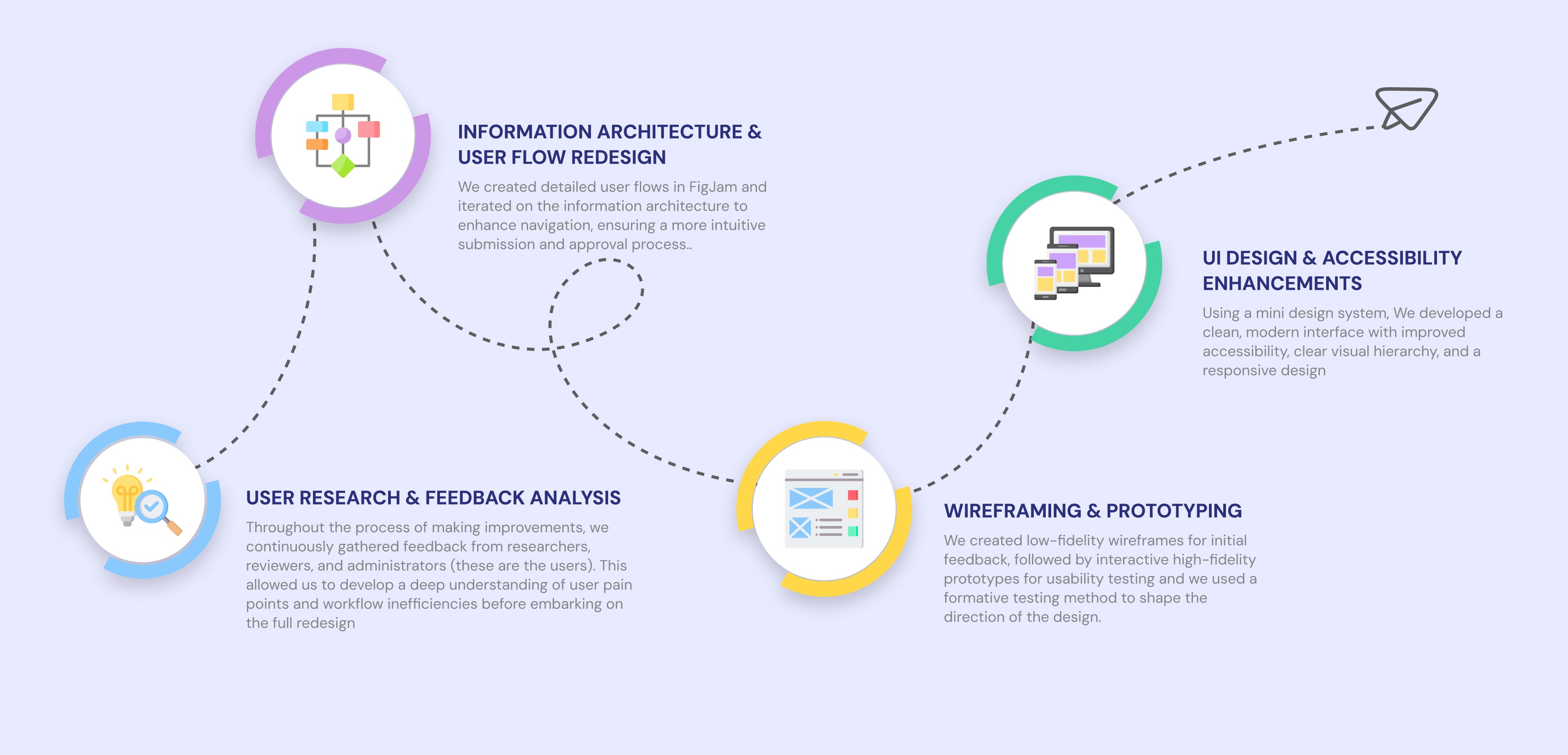
To address these challenges, the following process was followed with so many iterations at every stage:
To address these challenges, the following process was followed with so many iterations at every stage:
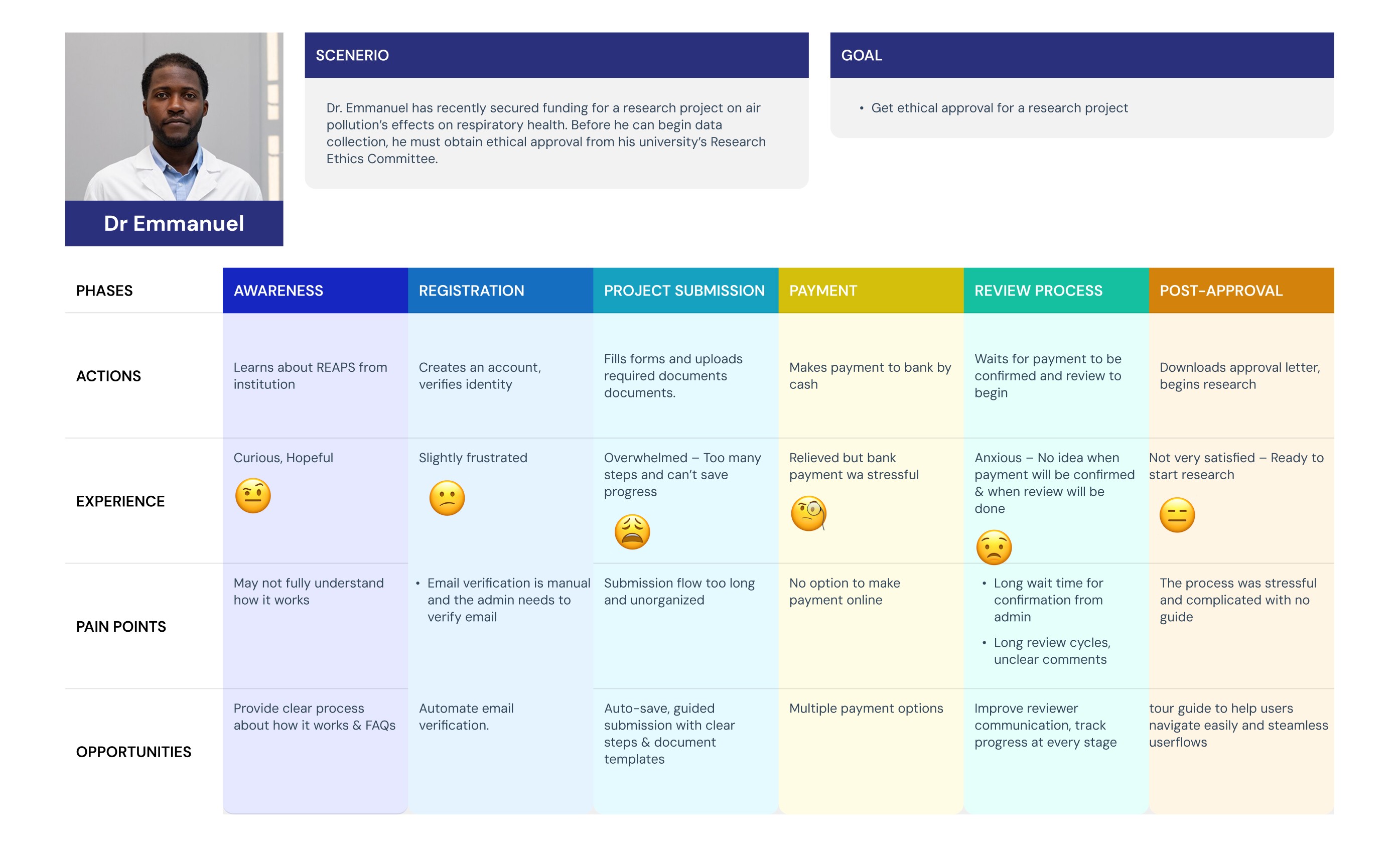
User Journey Map
User Journey Map
User Journey Map
To address these challenges, the following process was followed with so many iterations at every stage:
To address these challenges, the following process was followed with so many iterations at every stage:
Hi-Fidelity designs
Hi-Fidelity designs
Hi-Fidelity designs
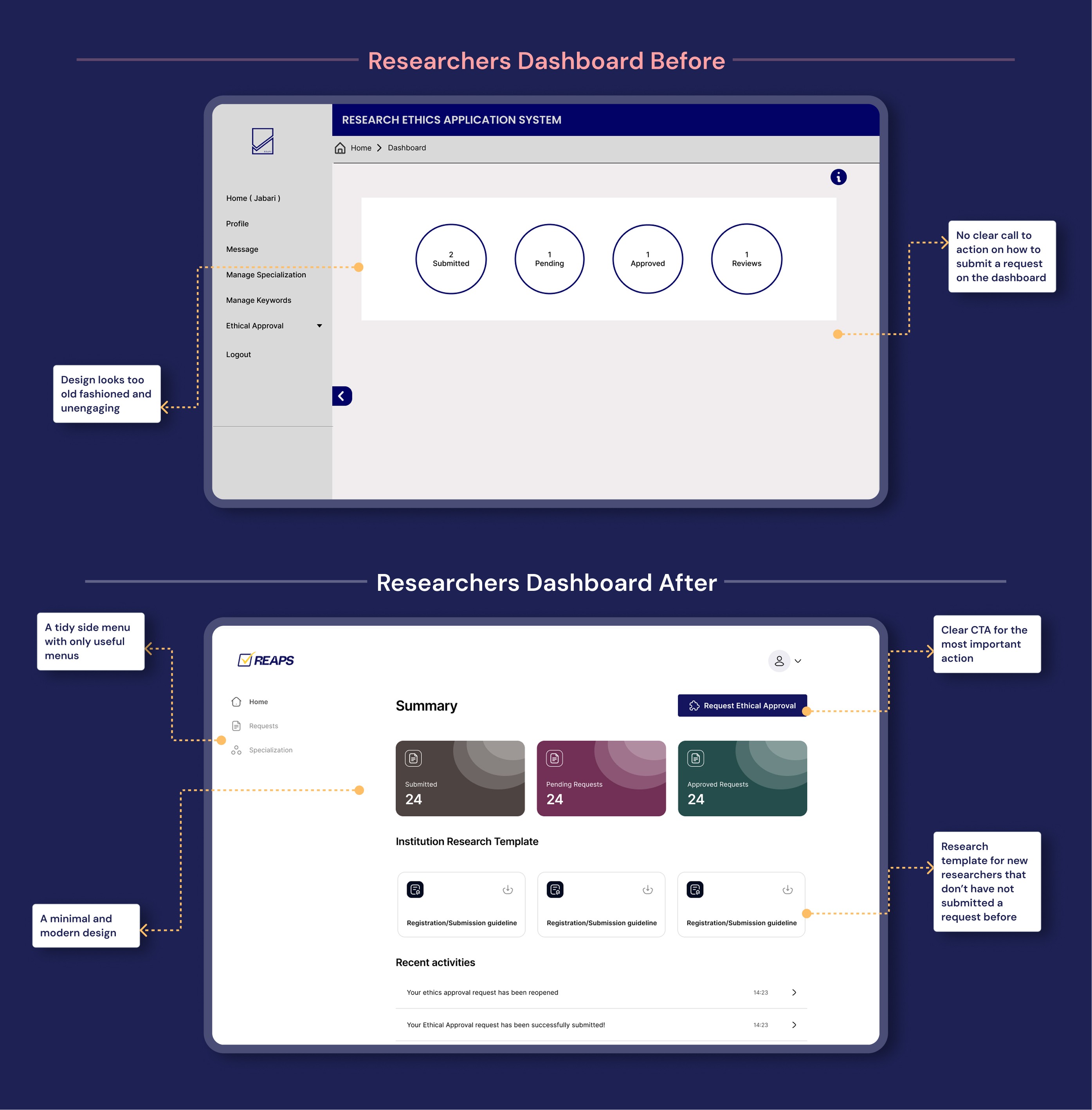
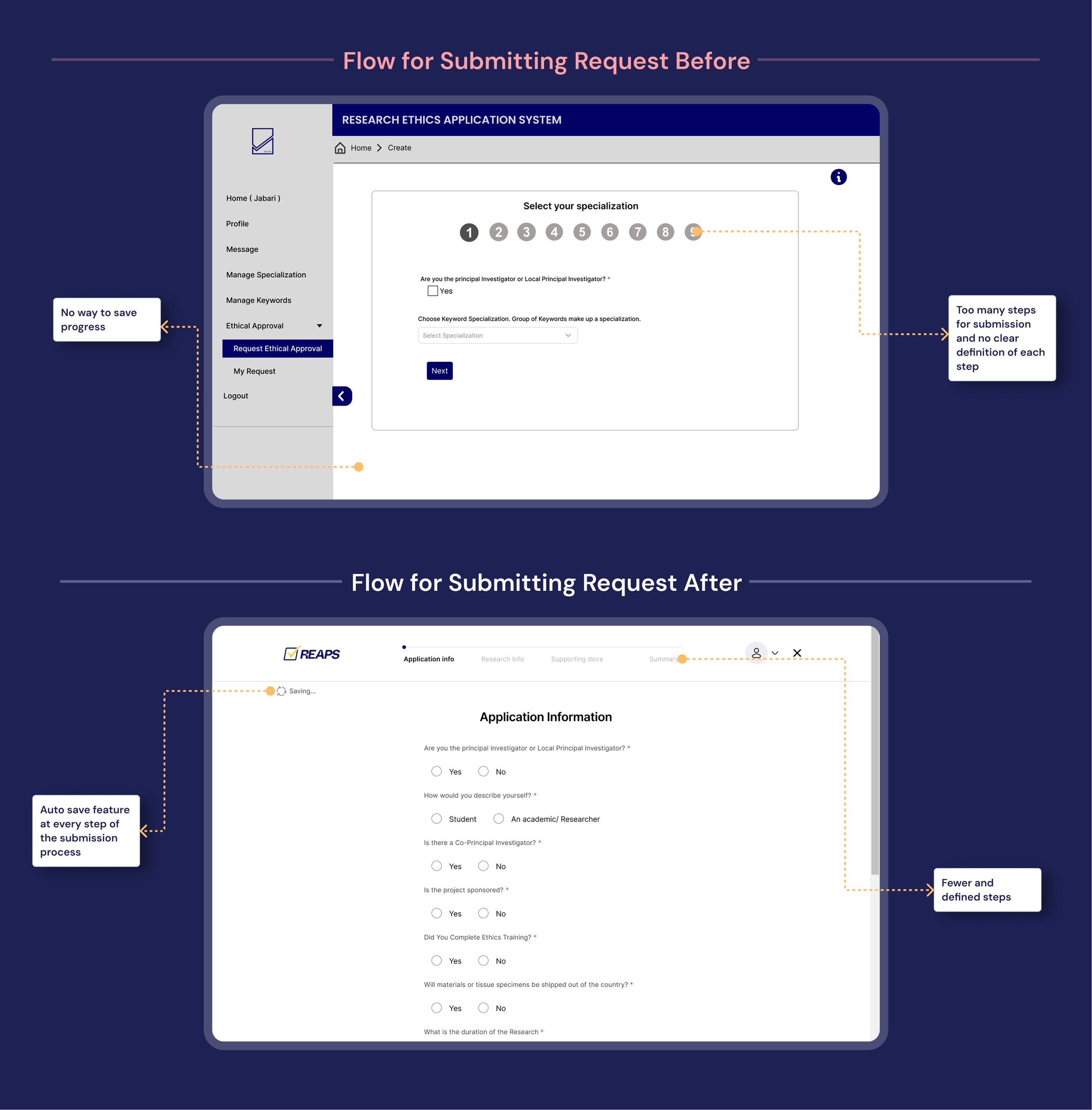
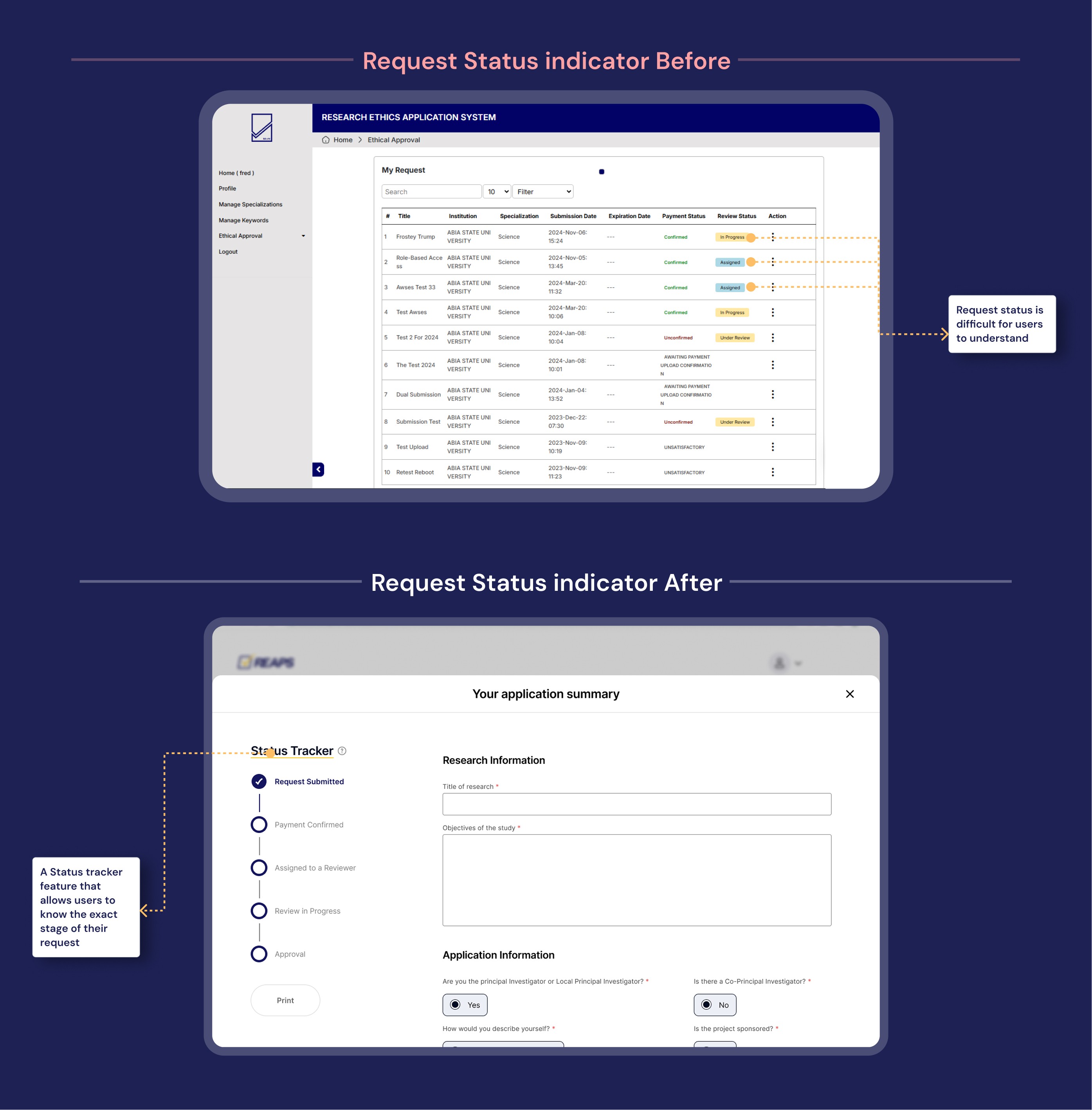
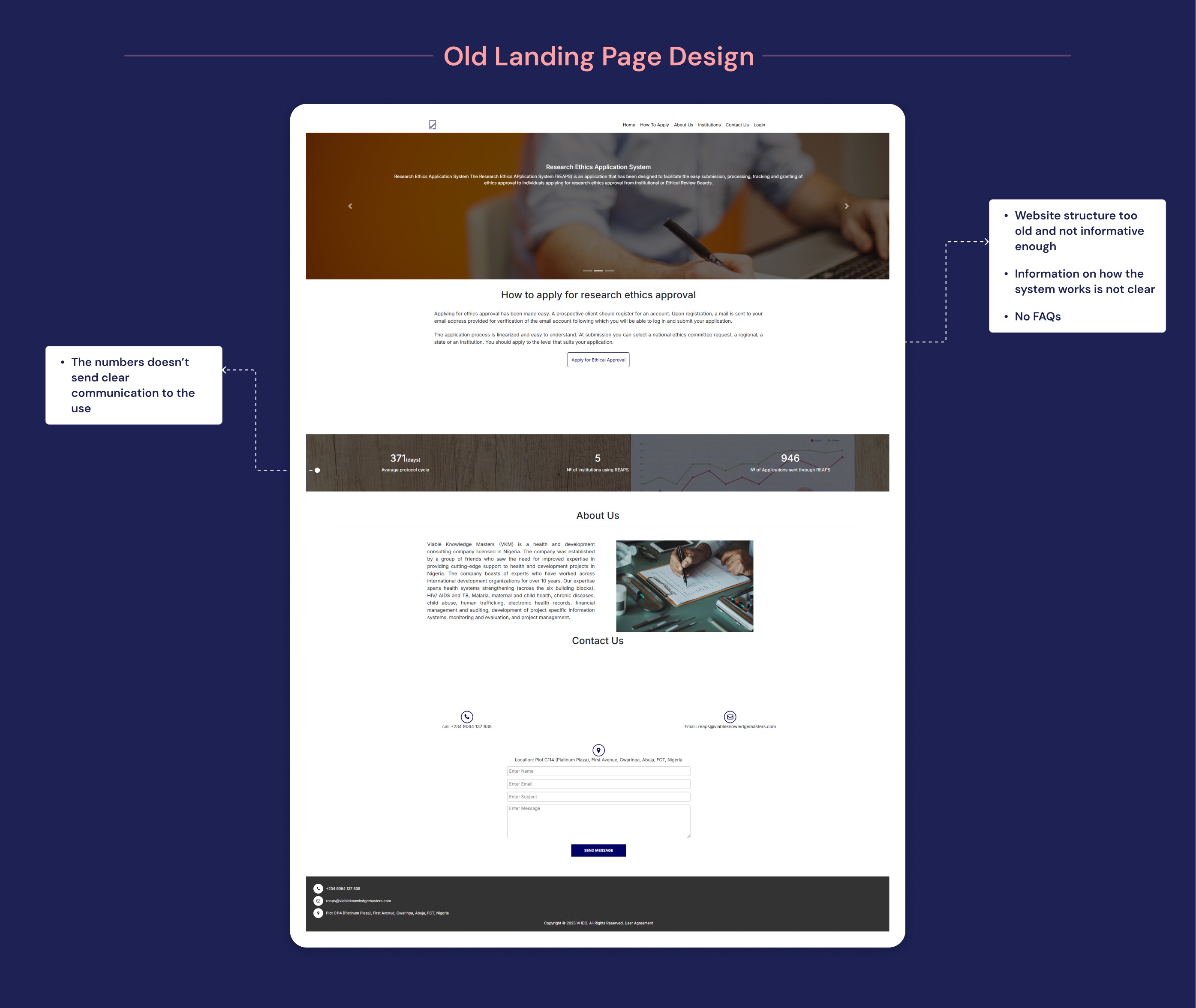
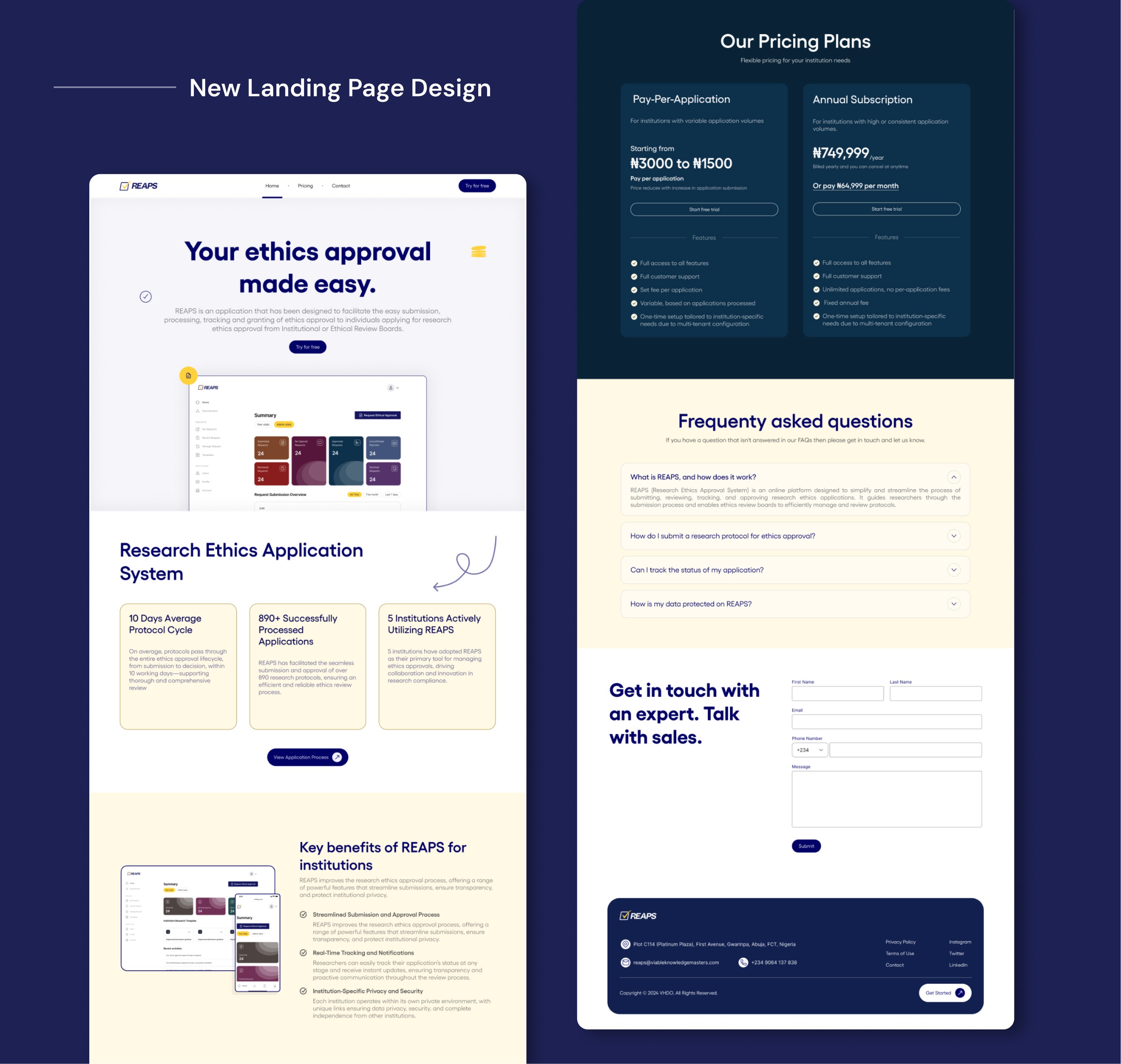
Below are some of the design screens and evolution they have gone through
Below are some of the design screens and evolution they have gone through
Project Challenges
Project Challenges
Project Challenges
Managing diverse institutions under one system:
Managing diverse institutions under one system:
The system needed to serve multiple institutions, each with its own unique research ethics approval process, some institutions had different review workflows, approval criteria, and payment structures.
A single, one-size-fits-all system would not work without creating friction and confusion.
The system needed to serve multiple institutions, each with its own unique research ethics approval process, some institutions had different review workflows, approval criteria, and payment structures.
A single, one-size-fits-all system would not work without creating friction and confusion.
✅ Solution
✅ Solution
We adopted a multi-tenant architecture that allowed us to onboard each institution and configure its workflows, payment models, and review criteria while using a shared system through our super admin dashboard. This approach ensured scalability and customization without compromising usability.
We adopted a multi-tenant architecture that allowed us to onboard each institution and configure its workflows, payment models, and review criteria while using a shared system through our super admin dashboard. This approach ensured scalability and customization without compromising usability.
Designing for a Non-Tech-Savvy Audience:
Designing for a Non-Tech-Savvy Audience:
Many researchers are not very tech-savvy, making it challenging to introduce new digital interactions. Complex forms and multi-step processes often overwhelmed users.
Many researchers are not very tech-savvy, making it challenging to introduce new digital interactions. Complex forms and multi-step processes often overwhelmed users.
✅ Solution
✅ Solution
I simplified the UI, used progress indicators, and included inline guidance and tool tips to help users navigate smoothly.
I simplified the UI, used progress indicators, and included inline guidance and tool tips to help users navigate smoothly.
Results
Results
Results
We managed to significantly cut the support queries related to these challenges by approximately 50%, notably lowering the manual effort for our development squad and enhancing effectiveness as a whole.
This enabled us to hold onto our client and even substantiate an increase in our service charges due to the improved service.
We managed to significantly cut the support queries related to these challenges by approximately 50%, notably lowering the manual effort for our development squad and enhancing effectiveness as a whole.
This enabled us to hold onto our client and even substantiate an increase in our service charges due to the improved service.